

The Government has released Shs16.537 trillion for the third quarter of the Financial Year 2025/26, as Uganda continues to register strong macroeconomic stability despite being an election year, the Ministry of Finance, Planning and Economic Development has announced.
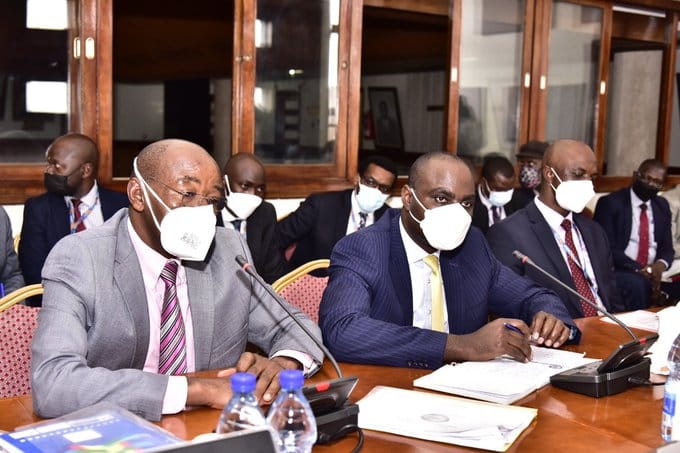
Addressing the media during a press briefing on Friday, the Permanent Secretary and Secretary to the Treasury, Ramathan Ggoobi, said the Quarter Three expenditure limits were issued in line with the Government’s fiscal consolidation agenda, aimed at sustaining macroeconomic stability and maintaining fiscal discipline.
“This impressive state of the economy is unlike previous election years that were largely characterised by inflation and exchange rate volatility. It is a result of prudent economic management and close coordination between fiscal and monetary policies,” Ggoobi said.
Economy Remains Resilient
According to the Ministry, Uganda’s economy continues to show resilience amid global uncertainties and election-related pressures. GDP growth stood at 6.3 percent in FY 2024/25 and is projected to rise to between 6.5 and 7 percent in the current financial year, with expectations of double-digit growth in the medium term when oil production begins.
The size of the economy is projected to reach USD 68.4 billion (Shs249.4 trillion) in FY 2025/26.
Inflation has remained stable at 3.1 percent for November and December 2025, making Uganda one of the countries with the lowest inflation rates in Africa over the past decade. The Uganda Shilling has also remained strong, appreciating by 2.45 percent against the US dollar by the end of December 2025.
Exports of goods and services reached USD 13.4 billion in FY 2024/25, while the country recorded a Balance of Payments surplus of USD 2.37 billion by October 2025 — the highest in 15 years. Foreign Direct Investment rose to USD 3.5 billion, while remittances from Ugandans abroad hit USD 1.6 billion.
Tourism earnings also rebounded strongly, reaching USD 1.7 billion, supported by peace, improved infrastructure, and aggressive destination promotion.
Half-Year Budget Performance
The approved Budget for FY 2025/26 stood at Shs 72.38 trillion, later revised to Shs 80.48 trillion following a supplementary budget of Shs 8.1 trillion.
By the half-year mark, the Government had released 58.1 percent of the approved budget, with 63.4 percent of the GoU budget and 77 percent of the development budget disbursed. The strong development spending was largely driven by funding to the Ministry of Works and Transport to sustain road construction and maintenance.
The government also confirmed that all election-related expenditures have been fully facilitated and that salaries for public servants have been paid.
Breakdown of Third Quarter Releases
For the third quarter, the Shs16.537 trillion release covers:
- Shs2.175 trillion for wages and salaries
- Shs2.898 trillion for non-wage recurrent expenditure
- Shs514 billion for GoU development projects
- Shs3.277 trillion for externally financed projects
- Shs7.591 trillion for debt repayment and treasury operations
- Shs82 billion from local revenue
Key allocations include Shs7.59 trillion for debt servicing, Shs318.24 billion for pensions and gratuity, and funding for Parliament, the Judiciary, and oversight institutions.
Priority Sectors Funded
The release prioritises the Government’s ATMS strategy — Agro-industrialisation, Tourism development, Mineral-based industrialisation (including oil and gas), and Science, Technology and Innovation.
Notable allocations include:
- Shs469.69 billion for oil and gas development
- Shs167 billion for agro-industrial research and interventions
- Shs166.15 billion for ICT, innovation, and digitalisation
- Shs32.8 billion for tourism promotion and infrastructure
Security agencies, infrastructure development, health, education, and local governments also received significant funding to ensure the delivery of services and support economic growth.
Government Warns on Salary Delays
Ggoobi cautioned Accounting Officers against delaying payment of salaries and pensions, noting that the Government will take appropriate sanctions against non-compliant officials.
He urged Ministries, Departments, Agencies and Local Governments to fast-track project implementation to sustain momentum towards wealth and job creation.
Positive Outlook
The Ministry reaffirmed that Uganda’s economic outlook remains positive, with growth expected to accelerate further in 2026 and reach double digits once oil production begins.
“Uganda’s economy is stable, vibrant, and competitive. Prices and the exchange rate are expected to remain stable in the medium term, supported by prudent macroeconomic management and strong export performance,” Ggoobi said.
