


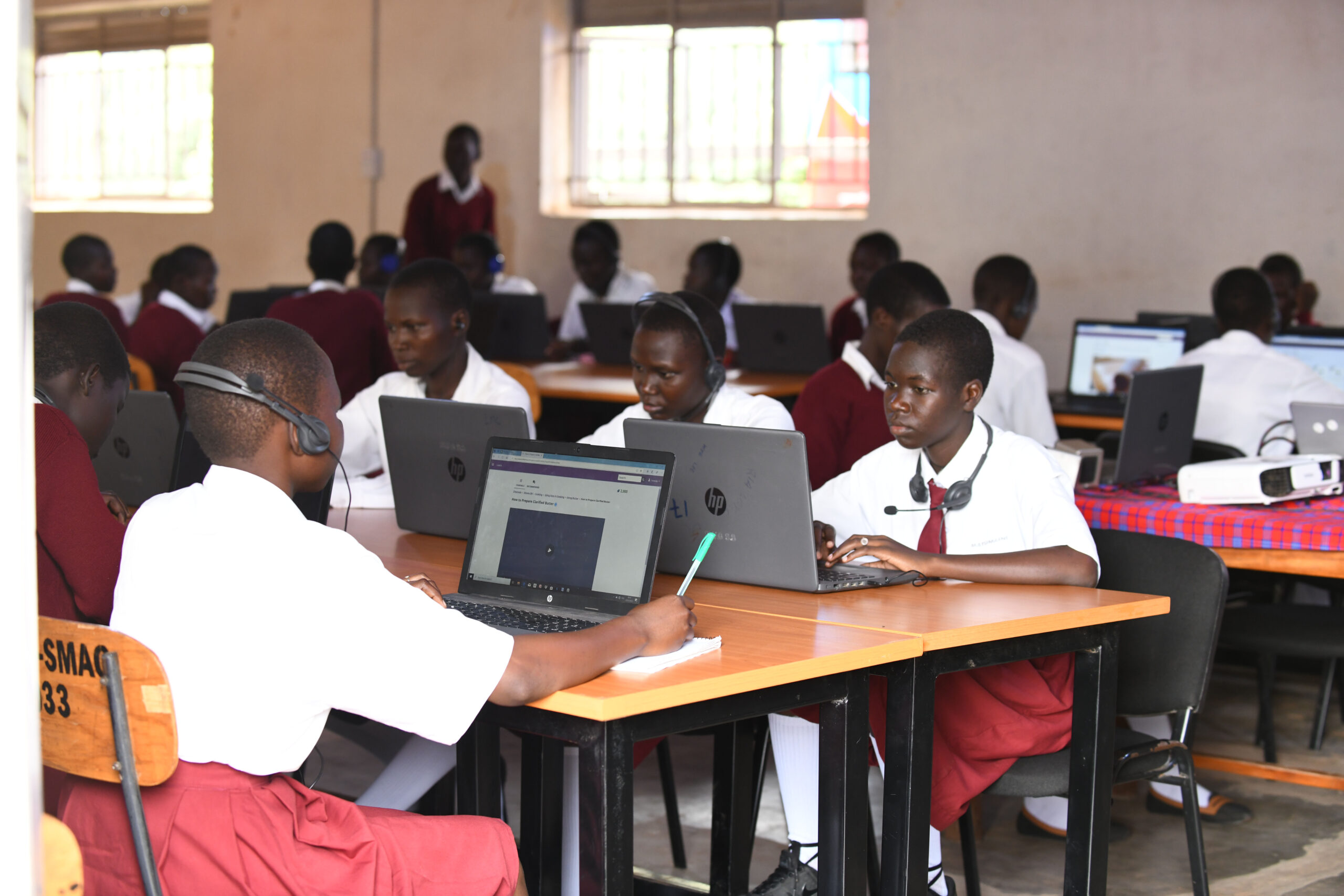
Around 90 percent of adolescent girls and young women do not use the internet in low-income countries, while their male peers are twice as likely to be online, according to a new UNICEF analysis issued on the International Day of Girls in ICT.
“Closing the digital divide between girls and boys is about more than just having access to the internet and technology. It’s about empowering girls to become innovators, creators, and leaders,” said UNICEF Director of Education Robert Jenkins. “If we want to tackle gender gaps in the labor market, especially in Science, Technology, Engineering, and Math fields, we must start now by helping young people, especially girls, gain digital skills.”
The report – Bridging the Digital Divide: Challenges and an Urgent Call for Action for Equitable Digital Skills Development – takes a close look at the gender digital divide among young people aged 15-24 years by analyzing available data on internet use, mobile phone ownership, and digital skills in mostly low-, lower-middle-, and some middle-income economies. Though more gender-disaggregated data is needed to better monitor, understand, and work toward digital inclusion, the report finds that girls are being left behind in an increasingly digital and connected world.
While advancing access to the internet is important, it is insufficient for digital skills training. For example, in most countries analyzed, the share of youth with access to the internet at home is much higher than that of youth with digital skills.
Girls are the least likely to have the opportunities to develop the skills needed for 21st-century learning and employment, according to the report. On average across 32 countries and territories, girls are 35 percent less likely than their male peers to have digital skills, including simple activities like copying or pasting files or folders, sending emails, or transferring files.
The root barriers are far deeper than a lack of access to the internet, according to the report. The findings suggest that educational and family environments play a critical role in the gender digital divide. For example, even within the same home, girls are far less likely than boys to access and be able to make full use of the internet and digital technologies. Among 41 countries and territories included in the analysis, households are much more likely to provide mobile phones for boys than girls.
Barriers to accessing opportunities to higher learning and the labor market, pervasive discriminatory gender norms and stereotypes, and concerns over online safety may further restrict girls’ digital inclusion and skills development.
The report also argues that even when girls have equitable access to gain foundational reading and math skills – and perform on par or better than their male peers – it does not always translate to digital skills. To break the barriers holding girls back, they need early exposure and access to technology, digital and life skills training, and efforts that address harmful gender stereotypes, especially within families, and online violence.
UNICEF is calling on governments and partners to close the gender divide and ensure that girls have the opportunities to succeed in a digital world. Some of the recommendations include:
- Teach digital skills equally to girls and boys in and out of school, including community programs.
- Protect girls’ safety online through virtual safe spaces, policies and laws, and education.
- Promote girls’ access to peer learning, mentoring, internships, and job shadowing in the digital/STEM world.
* The report focuses on the gender digital divide among youth aged 15-24 years. For simplicity, the press release shortens the age grouping of “adolescent girls and young women” and “adolescent boys and young men” to “girls” and “boys”.
The analysis presented in this report draws upon data from MICS and DHS, with the findings on digital skills specifically relying on data collected through the mass media and ICT module in MICS6.
